By now, you should have realized that the terminology used in prior discussions is rather verbose. This is because, in the current literature, there is a rather confusing mix of overlapping names:
CAI - Computer-Assisted Intervention
CAS - Computer-Assisted Surgery
IGI - Image-Guided Intervention
IGS - Image-Guided Surgery
IGT - Image-Guided Therapy
While Giménez et al. (2020) has attempted to provide a unified discussion surrounding these terms, their definitions have not been widely adopted (yet).
Why the Confusion?
The terminology confusion arises because CAS is inherently multidisciplinary. Each sub-discipline developed its own terminology during the field’s early development, resulting in overlapping and sometimes conflicting terms.
Healthcare is provided by a multidisciplinary teams of health professional, in stages, at different part of a hospital system. Concretely, prior to a surgery, the patient is subject to an array of pre-surgical medical imaging scans for the purpose of diagnosis. These medical scans, including but not limited to CT and MRI, are operformed in an radiolgy suite by imaging technicians and radiologists.
Healthcare is provided by multidisciplinary teams of health professionals in stages across different parts of a hospital system. Prior to surgery, patients undergo an array of pre-surgical medical imaging scans for diagnosis. These medical scans, including but not limited to CT and MRI, are performed in a radiology suite by imaging technologists and radiologists. It should be noted that these pre-surgical imaging modalities typically cannot be acquired in real-time: the image acquisition may take minutes to hours, with computational post-processing (e.g. image formation/reconstruction) that requires additional time. This is in contrast to real-time imaging modalities such as US and X-ray fluoroscopy, where images are visualized as soon as they are acquired.
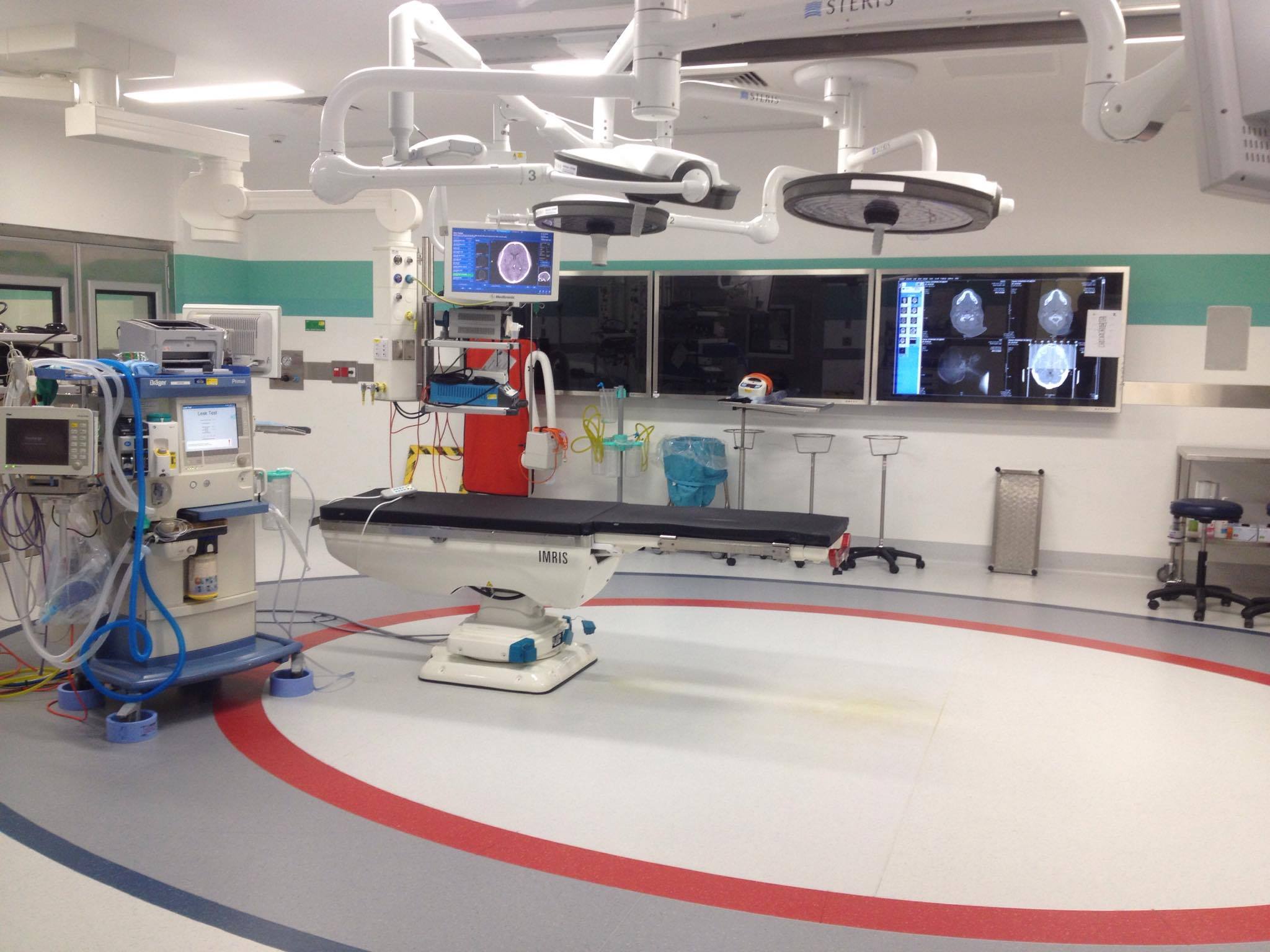
Figure 1:An interventional radiology suite where biopsy, diagnosis or therapies are precisely guided with real-time fluoroscopy. Image courtesy via Wikimedia commons, accessed here on 2026-01-03.
Based on the acquired medical imaging, hence the term image-guided, a treatment plan is formulated — for example, to identify the location of a tumour seated in deep tissues and determine the optimal trajectory for inserting an ablation applicator percutaneously. Such interventions can be performed by interventional radiologists in an interventional radiology (IR) suite, hence the term image-guided interventions (IGI).
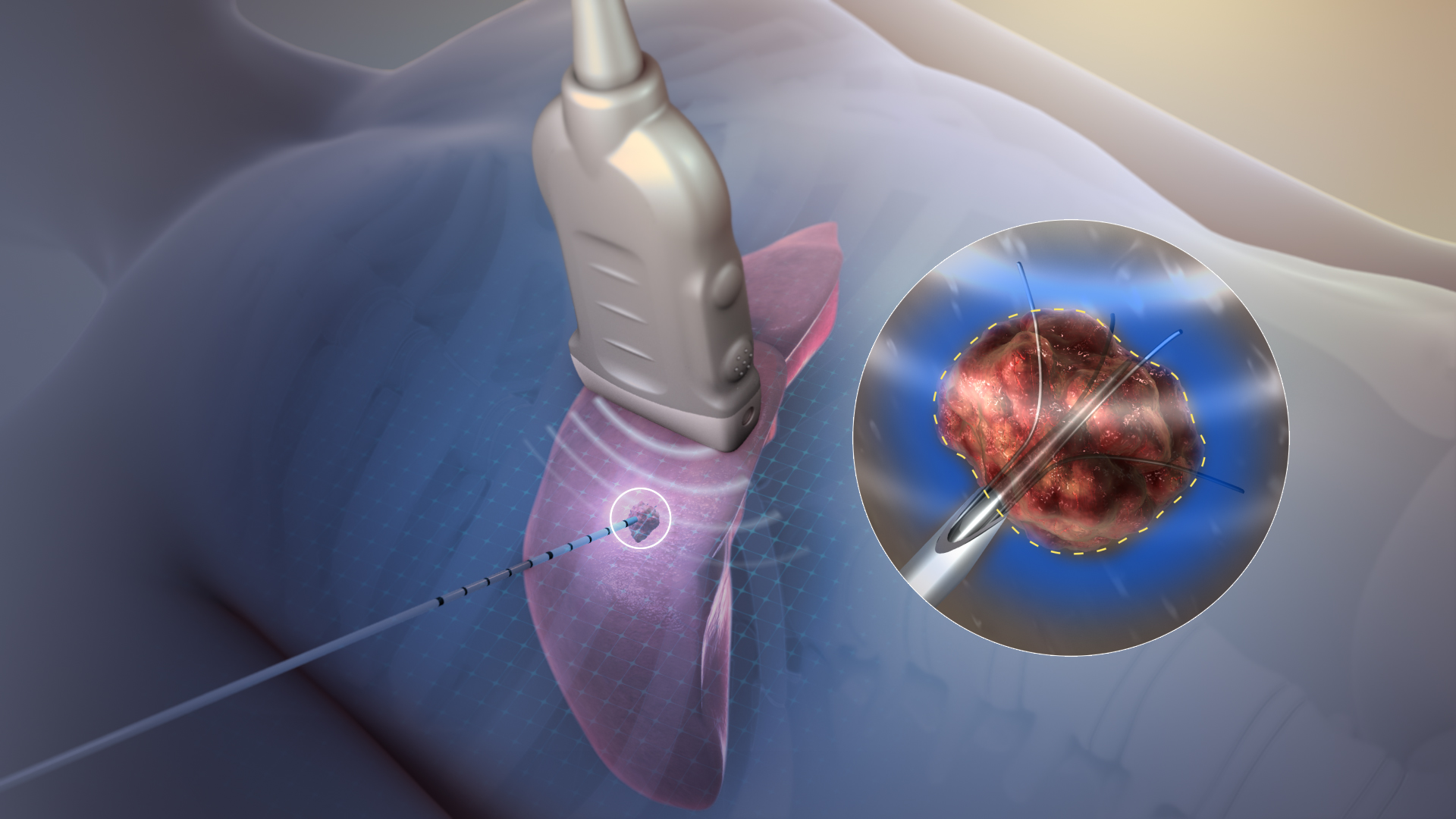
Figure 2:A depiction of an ultrasound-guided, percutaneous liver tumour ablation using radiofrequency. Image courtesy via Wikimedia commons, accessed here on 2026-01-03.
Surgery involves the dissection of tissues to access surgical targets and the joining of tissues to facilitate healing. Surgery is performed in the operating room (OR) by teams of medical specialists, including surgeons, anesthesiologists, nurses, and technologists. Unlike diagnostic imaging suites, a typical OR is not equipped with medical imaging modalities, although mobile US or C-arm fluoroscopy may be utilized for intraoperative imaging.
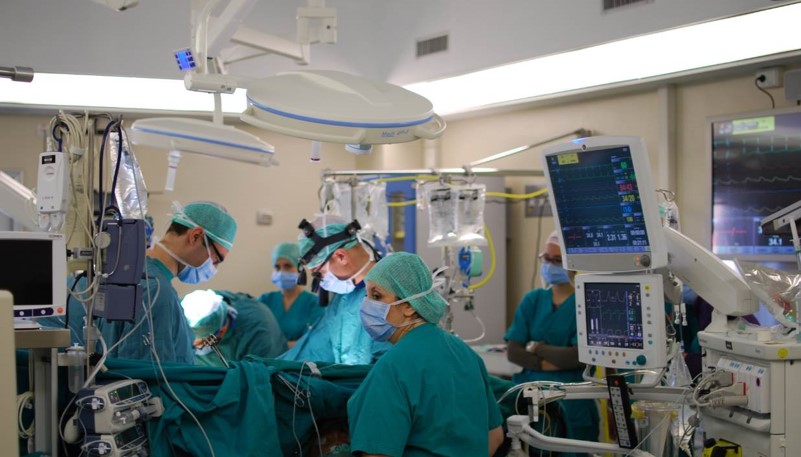
Figure 3:A typical operating room with a teams of medical professionals, image courtesy of Prof. Matt Clarkson at UCL.
A hybrid operating room is a surgical theatre equipped with advanced medical imaging modalities such as floor-mounted C-arm fluoroscopy, CT, or MRI. These systems enable MIS, which minimizes surgical trauma and incision size. MIS procedures are typically performed percutaneously, guided by real-time imaging from fluoroscopy, US, or intraoperative 3D imaging such as intraoperative MRI (iMRI).
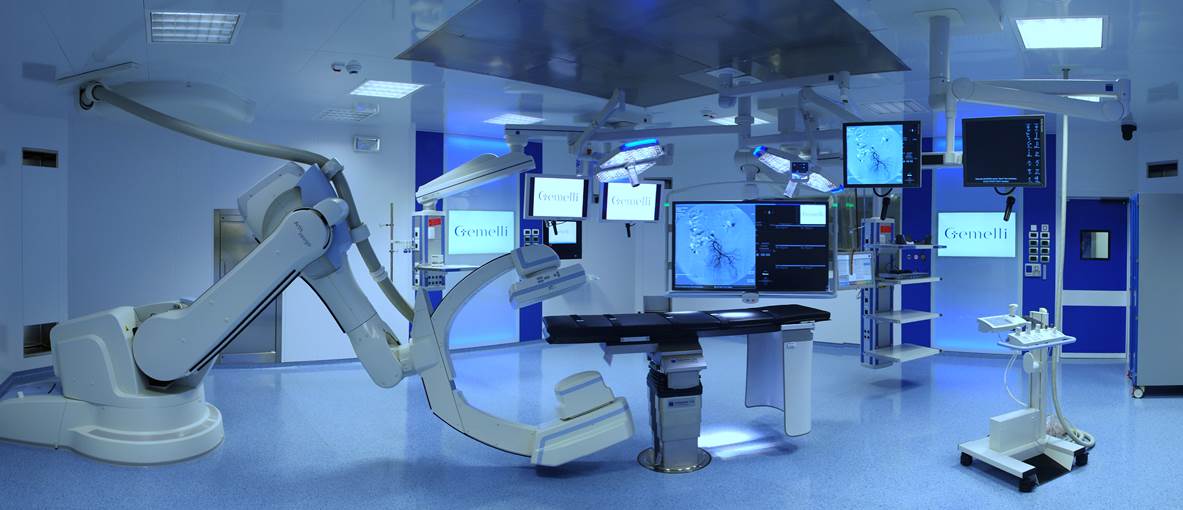
Figure 4:A hybrid operating room with medical imaging modalities and computing resources. Image courtesy via Wikimedia commons, accessed here on 2026-01-03.
Nomenclature
For the purpose of this course, let’s adopt the following nomenclature:
Surgery: the act of providing access to surgical targets; a procedure involving cutting and joining a patient’s tissues
Therapy: the act of treating a medical condition, e.g., radiofrequency ablation (RFA) of a tumour, drug-eluting beads/stents, etc.
Interventions: the broader term that encompasses both surgery and therapy
Computer-Assisted: the use of computational methods in addition to imaging systems
Minimally Invasive: limited incision size
Using this nomenclature, you should be able to describe, in concise terms, what CAS, CAI, IGI, IGS, IGT, and MIS mean.
- Giménez, M., Gallix, B., Costamagna, G., Vauthey, J.-N., Moche, M., Wakabayashi, G., Bale, R., Swanström, L., Futterer, J., Geller, D., Verde, J. M., García Vazquez, A., Bos̆koski, I., Golse, N., Müller-Stich, B., Dallemagne, B., Falkenberg, M., Jonas, S., Riediger, C., … Marescaux, J. (2020). Definitions of Computer-Assisted Surgery and Intervention, Image-Guided Surgery and Intervention, Hybrid Operating Room, and Guidance Systems: Strasbourg International Consensus Study. Annals of Surgery Open, 1(2), e021. 10.1097/AS9.0000000000000021